A graduate of KAIST (South Korea) and a researcher at the Georgia Institute of Technology (USA), Sanjar Atamuradov— originally from Samarkand — is now creating one of the most ambitious platforms in global robotics: Humanola, a Silicon Valley startup that transforms telepresence into the foundation for physical artificial intelligence. The company enables operators anywhere in the world to control humanoid robots with minimal latency, converting every interaction into training data for future physical AGI.
In an interview with Zaryana Sorochina, Sanjar Atamuradov shared how his journey unfolded — from a boy herding sheep under the stars of Samarkand to the founder of a Silicon Valley startup that raised $2.5 million to build the foundation for global robotics.
Sanjar Atamuradov, Samarkand — founder of Humanola, LinkedIn
I was born in Samarkand — a city where childhood unfolds beneath endless stars and where dreams somehow feel closer. From an early age, I was fascinated by technology: I dismantled anything I could get my hands on, trying to understand how mechanisms worked, and later moved on to computers and robots. Perhaps that was when I first sensed the aspiration that one day I would definitely build my own drones and robots.
After finishing school, I left for South Korea to study at KAIST — one of the world’s leading universities in engineering and robotics. There, I pursued computer science with a focus on robotics, developing autonomous systems and drones. This experience became a starting point for me: I realized that I wanted to devote my life to humanoid robots and artificial intelligence.
While at KAIST, I tried to focus as much as possible on AI and robotics. During the academic year, I spent most of my time exploring theoretical aspects of AI and robotics, and during breaks I interned at companies to apply what I had learned. In Korea, the summer and winter breaks each last about 2.5 months, which provided ample time to work on meaningful industry projects.
After returning to South Korea, I interned at StoneLab Inc, where I contributed to developing a medical diagnostics application based on computer vision: data annotation, neural network training and model backend integration. At the same time, I built an API for biometric authentication — my first system used by real customers.
My next major step was work at Macroact Inc., where I developed autonomous navigation for a quadruped robot — algorithm optimization, behavior tuning and configuration of simulations in Gazebo (a program for creating virtual worlds with robots and other objects, allowing developers to test robot behavior and control algorithms without risk to real hardware). This became enormous groundwork for moving on to more complex robots.
While studying at KAIST, I also conducted research at AVE Lab and IRiS Lab. At AVE Lab, I developed algorithms for self-driving cars. At IRiS Lab, I worked on perception systems for autonomous vehicles — including LiDAR processing (a digital representation of space in the form of a “point cloud” obtained via laser scanning, Light Detection and Ranging) to lane detection. This stage gave me a deep understanding of how a robot “sees” the world.
After my research experience, I transitioned to industry. At Digitrack Inc, I worked on autonomous mobile robots (AMRs) for warehouse automation.
Later, at Raion Robotics, I worked on locomotion for quadruped robots. It was a true challenge — enabling a robot to walk stably, adapt to different surfaces and perform complex maneuvers.
My career eventually led me to the United States, to Atlanta, where I found myself in an environment entirely focused on advanced humanoid robotics research. I enrolled at the Georgia Institute of Technology (Georgia Tech) — one of the world’s leading centers for robotics and AI.
Studying in the United States became a pivotal period. I gained deep foundational knowledge in robot control, neural networks, perception systems and autonomous behavior. I took courses on robotic manipulation, motion optimization, machine learning and real-time algorithms — all of which form the basis of modern robotics.
Simultaneously, I worked as a robotics engineer at Atlanta Ventures, where I developed mobile robots for security and inspection tasks. That was when theory started to merge with practice — when classroom learning instantly transformed into code, algorithms and operational machines.
I later continued my research at Georgia Tech, focusing on scientific projects in the field of humanoid loco-manipulation — the ability of humanoid robots to coordinate movement, walking while lifting objects, opening doors and performing complex sequential tasks.
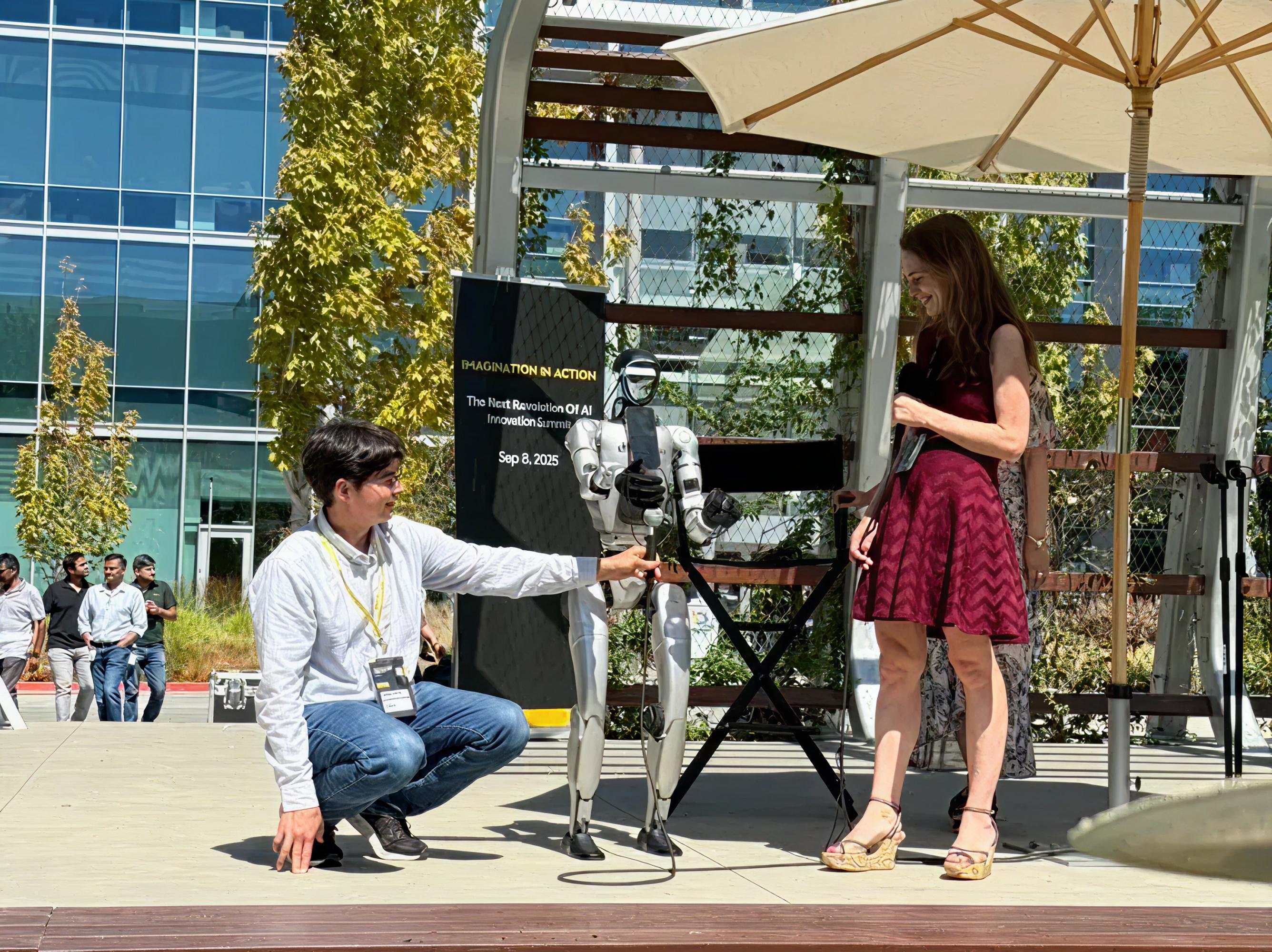
It was during this period that I realized: large language models made breakthroughs thanks to vast amounts of internet data. Robots, however, lack such an “internet” — they literally starve for data. I understood that the only scalable way to generate high-quality training data is teleoperation — robots controlled by human operators. Yet no one had treated this systematically.
That is when the idea appeared — the idea that changed my life: to build a platform that gives every roboticist a telepresence tool and creates infrastructure for physical AI data. Thus, in June 2025, Humanola was born.
Today, the energy surrounding robotics in the United States is extraordinary — many consider it the next wave of AI. Companies and research institutes are investing heavily in solving the universal robotics challenge, which is extremely difficult. But due to recent breakthroughs in AI, the development of physical intelligence has become feasible. The field is still in an early phase: mass deployment for physical labor automation has not yet happened. Humanoid robots working in factories, warehouses or homes in the U.S. do not yet exist — but this moment is very near.
Today, robot training data is isolated within companies and laboratories. Everyone collects their own small datasets, no one shares them, and the sector is effectively stalling. It is as if every AI system in 2023 were trained on its own tiny, local micro-internet.
Before Humanola, each company had to build its own data collection infrastructure — expensive, slow and inefficient. Many worked with limited datasets, slowing progress. A unified ecosystem combining data and providing access simply did not exist.
Our team is inspired by a future in which robots perform dangerous, repetitive or monotonous tasks. while humans focus on creativity and strategy. The only barrier between today and that future is the absence of data for physical AI. By addressing this, we accelerate the future by years.
I realized that the issue is not just the fragmentation of individual solutions, but the absence of an industry-level platform that all market participants could join. Duplication of efforts and isolation of data slows the entire sector. This understanding became the impulse to create Humanola.
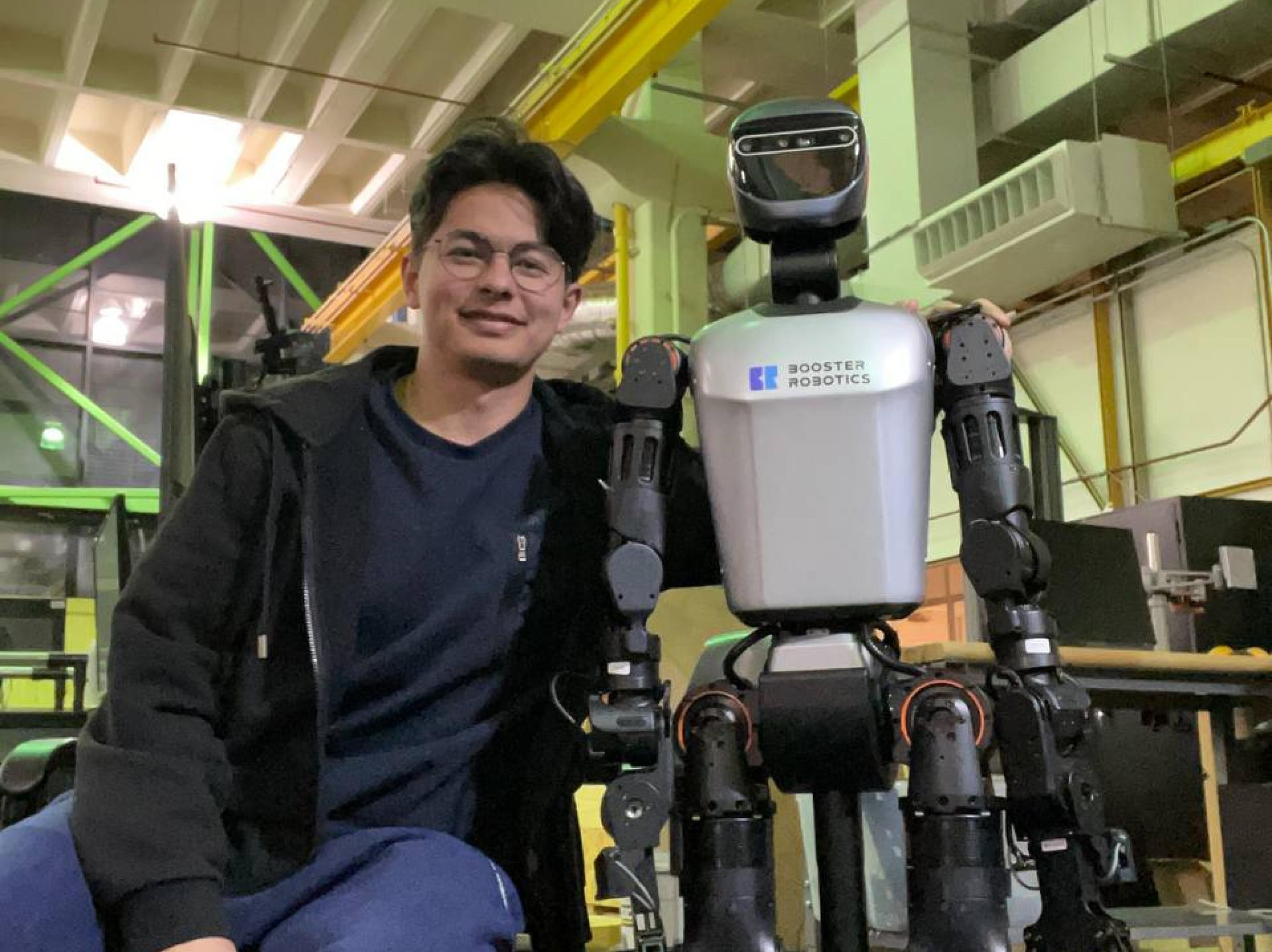
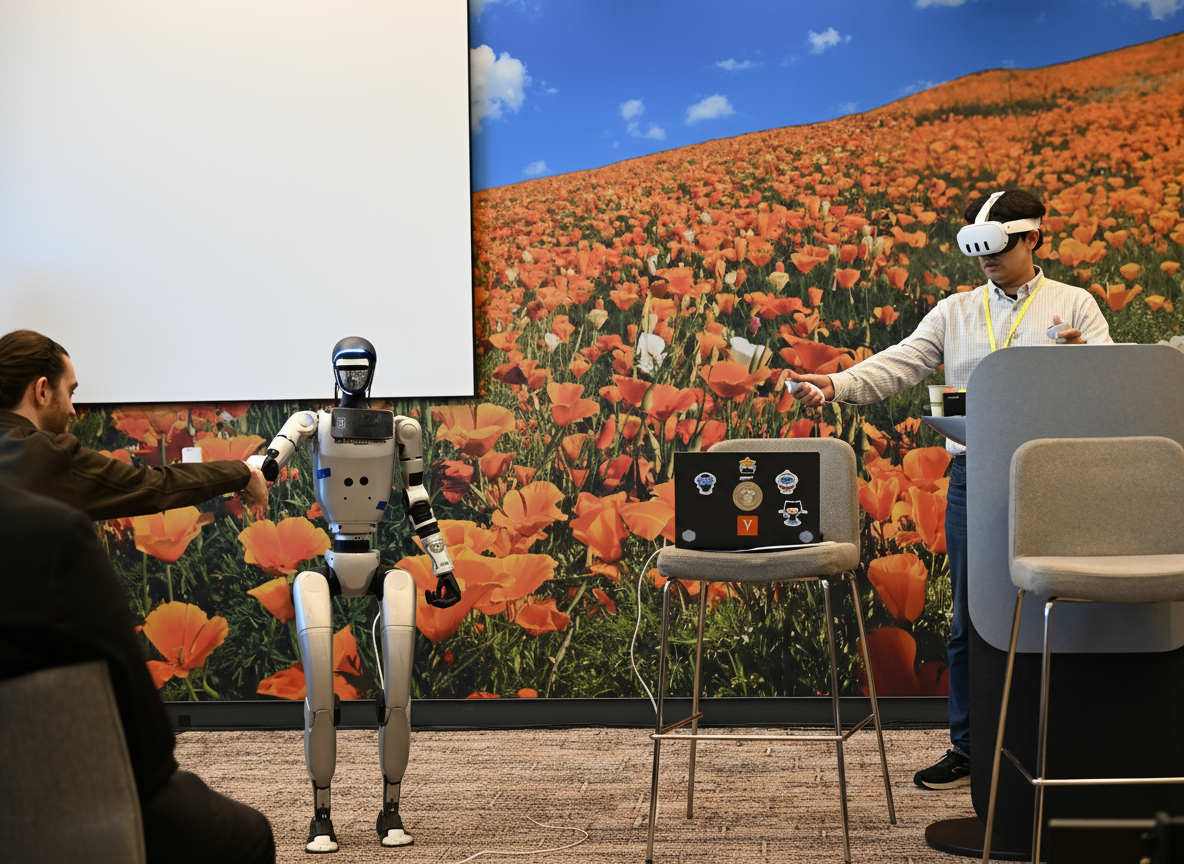
Humanola develops a platform for remote robot control and comprehensive infrastructure for collecting, processing and analyzing physical data.
The platform consists of two core components:
As a result, companies obtain a powerful tool that accelerates robot development.
Humanola is the only independent platform not tied to specific hardware and offering an end-to-end solution — from robot control to full data processing. Other solutions require companies to build their own infrastructure or do not offer such deep integration.
Our clients include companies deploying robots in logistics, agriculture and warehousing, as well as developers and researchers who require rapid access to high-quality data.
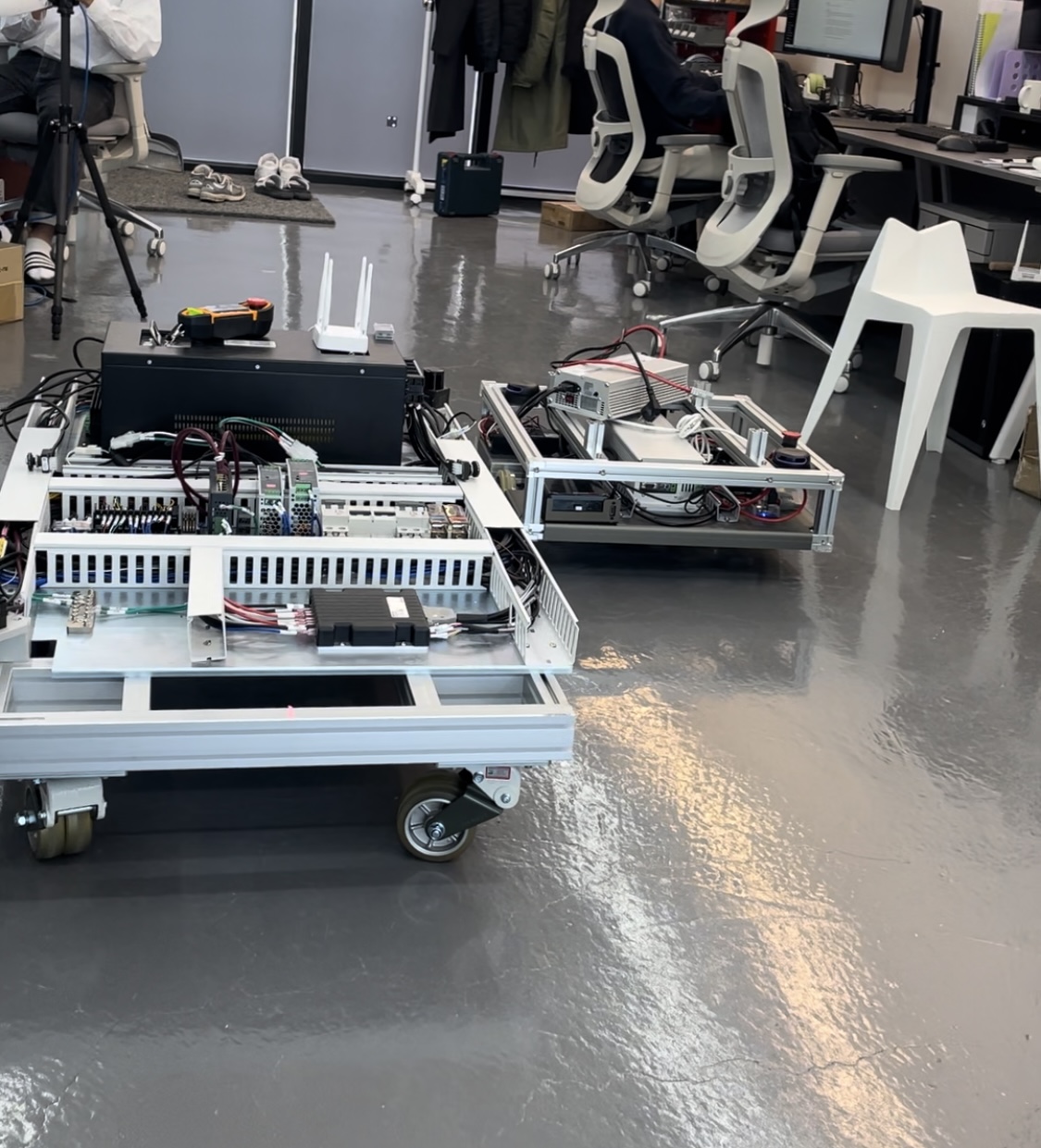
The most difficult task was achieving minimal latency over long distances and integrating diverse hardware. This required in-depth engineering across all levels — from the VR interface and network protocols to cloud infrastructure.
We succeeded by developing our own real-time network infrastructure based on UDP protocols with forward error correction (FEC) and adaptive streaming, similar to top-tier VR games. For global control, we implemented regional edge servers (USA, Asia, Europe), allowing us to maintain latency within 80–100 ms even across continents.
Hardware integration was accomplished via a unified API for robots — abstracting joint control, sensor streams and safety protocols so that any humanoid or manipulator could be connected with minimal configuration.
A major breakthrough came when we combined private 5G networks in test ettings with GPU-accelerated video encoding/decoding on both the operator and robot side. This enabled stable teleoperation with latency below 100 ms — for example, from Tashkent to San Francisco. We demonstrated that global, scalable telepresence is real.
The primary motivator not to give up is belief in the mission and the understanding that we are building not just a product, but the foundation for the next generation of AI and robotics.
The technical breakthrough enabling remote operation with sub-100-ms latency was critical — it was the moment when the concept became reality and the product reached the market.

What I am most proud of:
We have completed a seed round of $2.5 million from Link Ventures, Bad Ideas Fund, the Georgia Tech Fund, and Akmal Paiziev. Our first clients have already begun implementing the platform, and we are observing clear validation of both the relevance of the problem and the value of our solution. Revenue metrics and user figures are not being disclosed due to the early stage of the project.
We are supported by leading venture funds, and our clients are companies making serious investments in robotics. Adoption dynamics offer the clearest evidence of effectiveness.
The United States leads the world in developing the “brain” of robotics — AI and software systems enabling robots to think and act like humans. This is precisely what drives the industry forward.
Korea has strong teams and continually pushes technological boundaries. However, its scale is far smaller than that of the United States. Korean companies often focus on hardware and innovation but lack the scale of the American market.
Uzbekistan is only at the beginning of its journey. Robotics here remains at an early stage of development.
We aim to integrate Humanola into all major humanoid robot platforms in the U.S. and globally, and to become an infrastructure partner for industry leaders — Nvidia, Tesla, Google — in building physical AGI.
As part of our expansion strategy for the first 12 months, we are targeting large-scale deployments through robot manufacturers. We are already begun hiring telepresence operators from Uzbekistan to control robots deployed in the U.S. and other countries.
This model creates significant economic opportunities — thousands of new jobs across Uzbekistan, while rapidly increasing the volume of collected training data. Operators can work from anywhere, robots can perform tasks anywhere, and data returns to improve models. This benefits the entire robotics sector, job creation in emerging markets and the advancement of physical AI.
We seek to accelerate the development of physical AGI — to make robots mass-market assistants and fundamentally transform approaches to labor. Our mission is to build the infrastructure that democratizes the industry and makes intelligent robots accessible everywhere.
Dream boldly and do not fear risk. All meaningful achievements occur at the edge of failure — perseverance and consistency are what matter most.
23 October 2026
22 October 2026
21 October 2026
19 October 2026