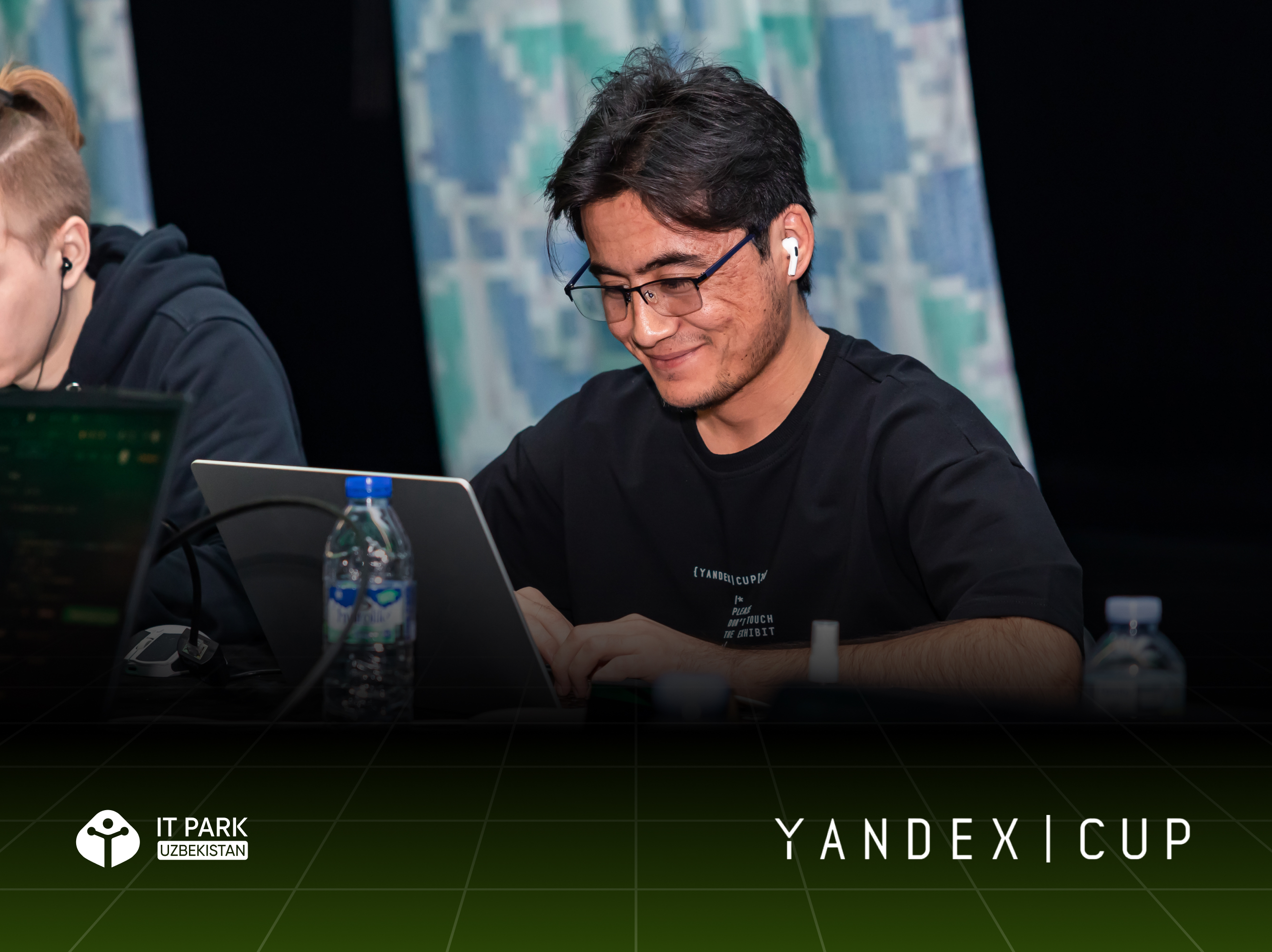
The finals of the international programming championship Yandex Cup 2025 were held in Istanbul. This year, the competition brought together 196 finalists from 21 countries, with a total prize fund of 12 million rubles. Interest in the championship continues to grow: more than 21,000 developers from around the world submitted applications to participate. A total of 61 specialists from Russia, Uzbekistan, China, the United States, Canada, and Japan were named among the winners.
Participants competed in six engineering tracks: machine learning (ML), frontend, backend, mobile development, analytics, and algorithms.
For the first time, juniors — developers aged 14 to 18 — took part in a full-format competition. The youngest finalist was 14-year-old Mark Dyadchenko from Rostov-on-Don.
The Yandex Cup 2025 finals reaffirmed Uzbekistan’s growing presence on the international technological landscape. This achievement reflects not only the individual excellence of the participants but also the strengthening capabilities of Uzbekistan’s IT ecosystem: comprehensive educational initiatives, an active community, a culture of competitive programming, and high standards of professional development are enabling young specialists to perform at a global level.
The two winners from Uzbekistan clearly demonstrate that the country has highly capable specialists who can confidently succeed in international competitions.
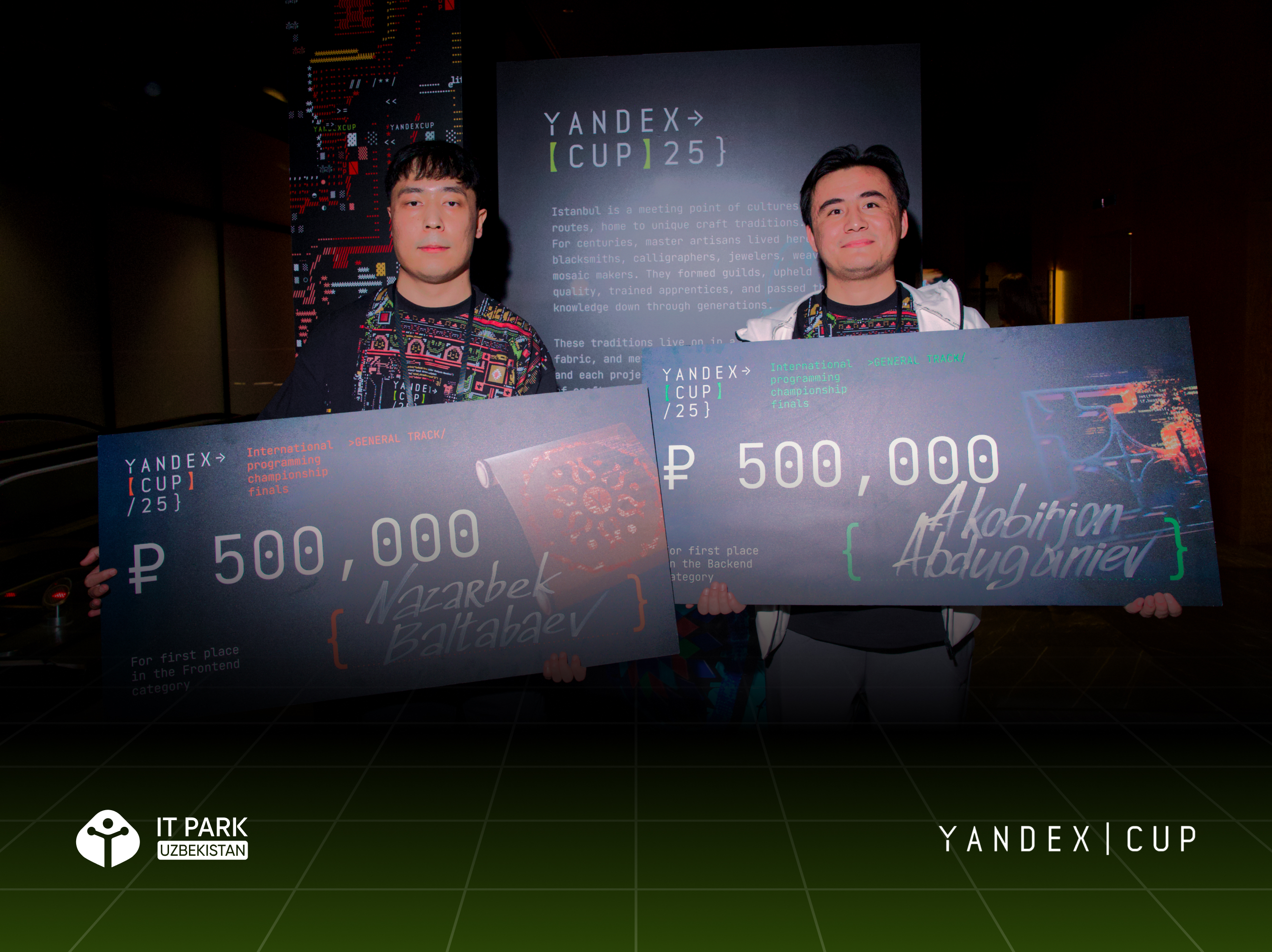
One of the winners is Nazarbek Baltabayev, a senior web developer at Uzinfocom and the founder of the KEP.uz platform, who became the absolute winner of the frontend track. He earned 158 points, surpassing the nearest competitor by more than 20 points and securing a confident first place.
For Nazarbek, this victory was particularly meaningful: last year he narrowly missed a prize position, and this sense of unfinished business became a strong motivator.
According to the developer, he prepared for the finals in a systematic manner, but intentionally stopped training the day before the decisive stage to avoid burnout.
“I tried to switch off completely — went for a walk, listened to music. On the day of the competition, I arrived calm and focused. I went to Istanbul for a prize place and expected to improve last year’s result,” he recalls.
The final proved significantly more challenging than the previous year: participants were given seven tasks to complete within five hours, most of which were extremely complex, requiring extensive analysis and precise implementation. Nazarbek submitted his first solution only after an hour. Ultimately, he solved five tasks fully or partially, confidently maintaining his lead until the scoreboard freeze.
“When waiting for the results to be announced, I was nervous, but internally I felt that I had secured first place,” he says.
The victory earned Nazarbek the championship trophy and 500,000 rubles, although he emphasizes that the achievement matters far more than the prize money. He plans to allocate part of the prize to the development of his KEP.uz platform and part to his family.
At Uzinfocom, his award was received warmly, with colleagues providing support from the outset. He also notes that the victory is only one step: ahead lies participation in new international competitions and continued contribution to the growth of the local IT community.
“The IT sector in Uzbekistan is growing incredibly fast. Communities, competitions, and educational initiatives are emerging. Competition is intensifying — and that is beneficial, as it drives progress.”
According to him, platforms such as KEP.uz already help young developers experience real competitive environments and reach the international level. The presence of Yandex in Uzbekistan also plays an important role: internships, hackathons, and championships set high standards that inspire young specialists.
“Many developers experience their first real ‘challenge’ after Yandex Cup — and begin taking their development much more seriously. This shapes a culture of growth,” Nazarbek notes.
Akobirjon Abduganiev, a developer at Ipak Yuli Technologies, was named one of the winners of the backend track of Yandex Cup 2025, demonstrating one of the strongest results among participants globally. For him, this was his first international final outside Uzbekistan — and the experience proved to be new, challenging, and inspiring.
According to Akobir, he traveled to Istanbul in a calm and focused state. His previous participation gave him a clear understanding of the competition format, allowing him to avoid unnecessary anxiety. He did not undertake a special intensive training program: working on large-scale banking systems and developing his own AI/AR project, he practiced by solving algorithmic problems on graph theory, dynamic programming, and string structures in his free time.
The 2025 final differed significantly from previous years. This time, the tasks closely resembled real backend cases: queue modeling, working with time intervals, process calculations, structural operations, and logic typical of high-load systems.
Participants were given six tasks to complete in five hours, allowing room for strategic planning.
“I solved the quickest tasks first to gain momentum, then moved on to the complex ones. The larger number of tasks played to my advantage: it allowed for strategic planning,” Akobir explains.
All tasks required engineering thinking and a deep understanding of how real services operate. His practical experience developing high-load banking systems helped him to analyze requirements rapidly and and find optimal solutions.
The final was extremely competitive: Akobir won by a margin of only one point, underscoring the intensity of the contest.
He describes his emotions after the results were announced candidly:
“My first feeling was relief. I wanted to test myself a year later, and this result fully justified the effort,” he shares.
At Ipak Yuli Technologies, his victory was met with enthusiasm. The support of his team colleagues played an important motivational role:
“The team’s reaction gave me even more motivation. I see this achievement as another step in professional growth.”
Akobir emphasizes that his main focus remains on his work and the development of his own startup project, where he and a small team are creating an AI–AR solution aimed at enhancing memory function and user experience.
Commenting on the development of Uzbekistan’s IT sector, Akobir notes the rapid growth in youth engagement, the increasing number of events, meet-ups, and competitions.
“We are building healthy competition, and this is the most important indicator of the industry’s progress. Communities are active, interest in IT is very high — this creates a strong environment for cultivating future engineers,” he says.
IT Park Uzbekistan congratulates the winners and finalists of Yandex Cup and underscores that the achievements of young engineers demonstrate the global potential of Uzbekistan’s IT industry. Such victories shape a new reputation for the country — as a place where strong engineers are trained and capable of competing successfully on the world stage.